
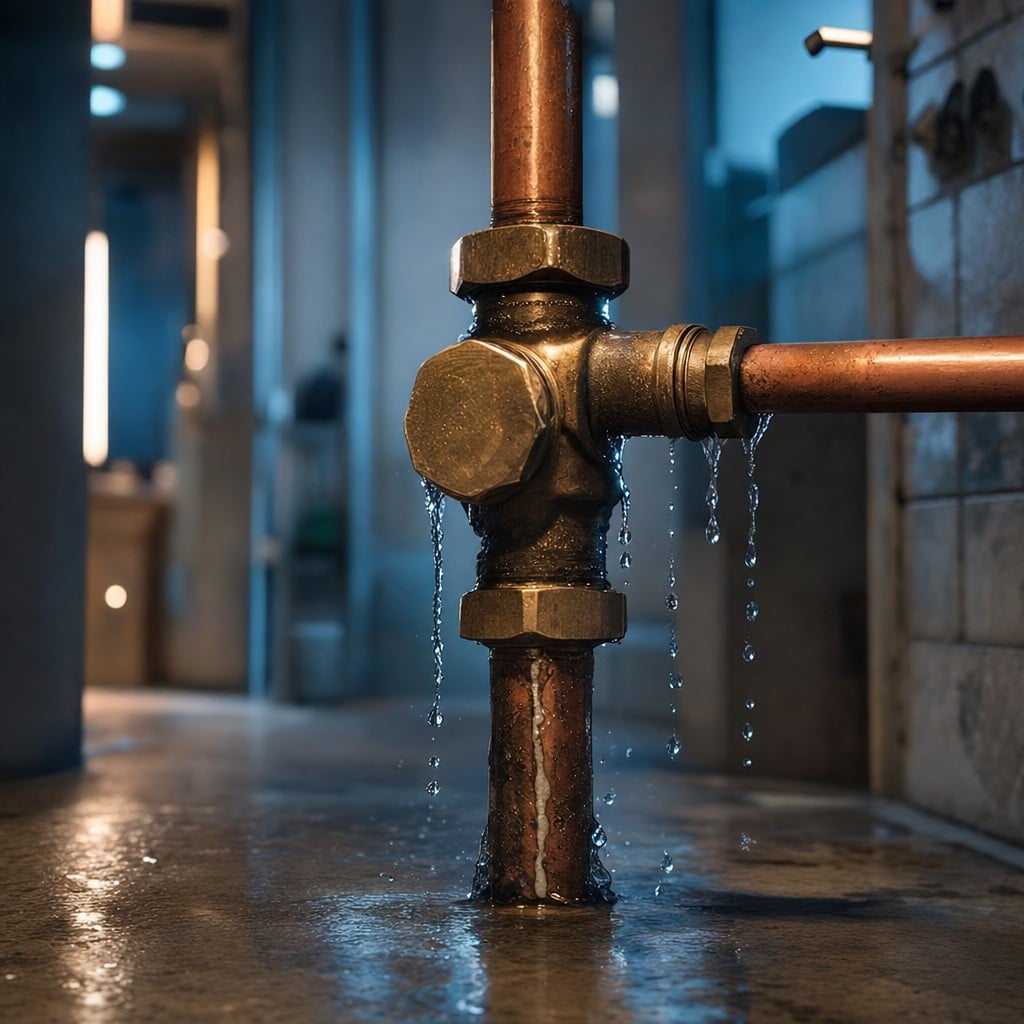
Recognising the First Signs of a Leak
A water leak can remain hidden for a long time before causing visible damage. That's why you must stay alert to subtle clues.
Here's what should raise your alarm:
- Moisture stains on walls, ceilings or at the base of radiators
- Abnormal drop in water pressure at the tap or shower
- Sounds of leaks (trickling, regular dripping) in walls or under floors
- Persistent damp or musty odours
- Unusual increase in water consumption despite normal usage
- Traces of limescale or whitish efflorescence on joints or visible pipes
- Swollen flooring or warped wall panels
If you notice any of these signs, don't delay: an ignored leak can damage load-bearing structures, rot wood, encourage mould and create capillary infiltration pathways.
Locating the Leak Quickly
Before intervening, you must pinpoint exactly where the water is coming from.
Here's how to proceed:
- Close all taps, then wait 15 minutes. If the water meter continues to advance, the leak is active in the system.
- Check visible pipes under the sink, under the bath, at the water heater, at the meter and behind radiators.
- Listen carefully: sometimes a leak sound will guide you towards the problem area.
- If the leak is from the wall or floor, you'll need to investigate further. This is often when you should call in a professional equipped with an inspection camera or moisture detector.
In a complete renovation project or on an old building, leaks are often hidden behind partitions or in ducts that run through several floors. An accurate diagnosis prevents you from breaking through walls at random.
Emergency Interventions to Know
Once the leak is identified, time matters. Here's how to act:
Leak on Visible Pipes
If the pipe is leaking but not structurally damaged, an emergency repair band can provide a temporary seal. For a proper repair, you'll need to cut out the faulty section and replace the tube (copper, PER, PVC depending on the system). This is standard plumbing work: cutting, fitting, soldering or crimping, sealing. The material and accessibility determine whether you fix it quickly or schedule a larger project.
Leak Under the Floor or in a Partition
This is more serious. You need to locate the leaking section. Depending on the layout, you dig a trench, break up the tile or slab, expose the pipe, then cut and replace it. In a renovation, this is a good opportunity to change the entire pipeline if it's old. Repeated leaks on the same network indicate the material is ageing.
Leak at a Tap or on a Fitting
Often simpler: replacement of the faulty seal or worn valve. Sometimes it's the valve itself that needs changing. A plumber will fix it in minutes if they have the right fitting in stock.
Leak at a Joint Connection
If it's a crimp (on PER tubes) or a weld that's leaking, you must disassemble and redo the connection. If the tube is damaged near the joint, you must cut further back and replace the entire section.
Preventing Deterioration and Structural Damage
The sooner you act, the cheaper it is. Secondary damage from a leak is costly:
- Stagnant water rots the wood of joists, partitions or finishes
- Mould spreads through enclosed spaces, hazardous to health
- Mineral salts accumulate and crack finishing materials (tiles, paint, plaster)
- Chronic moisture creates permanent swelling and destabilises lightweight structures
As soon as you suspect a leak, shut off water to the affected area (stop valve). Ventilate the affected spaces. Call a plumber immediately. In a renovation project, a leak spotted early is easy to fix. A leak ignored for months will cost ten times more to restore.
Act Now
If you've spotted signs of abnormal moisture or suspect a leak, contact the Wk haustechnik team at Geerenweg 16, 8303 Bassersdorf. A quick diagnosis can save your installation. Call +41 79 558 84 30 or visit our website for more information. We'll schedule an appointment as soon as possible and provide you with a clear estimate before any work begins.