
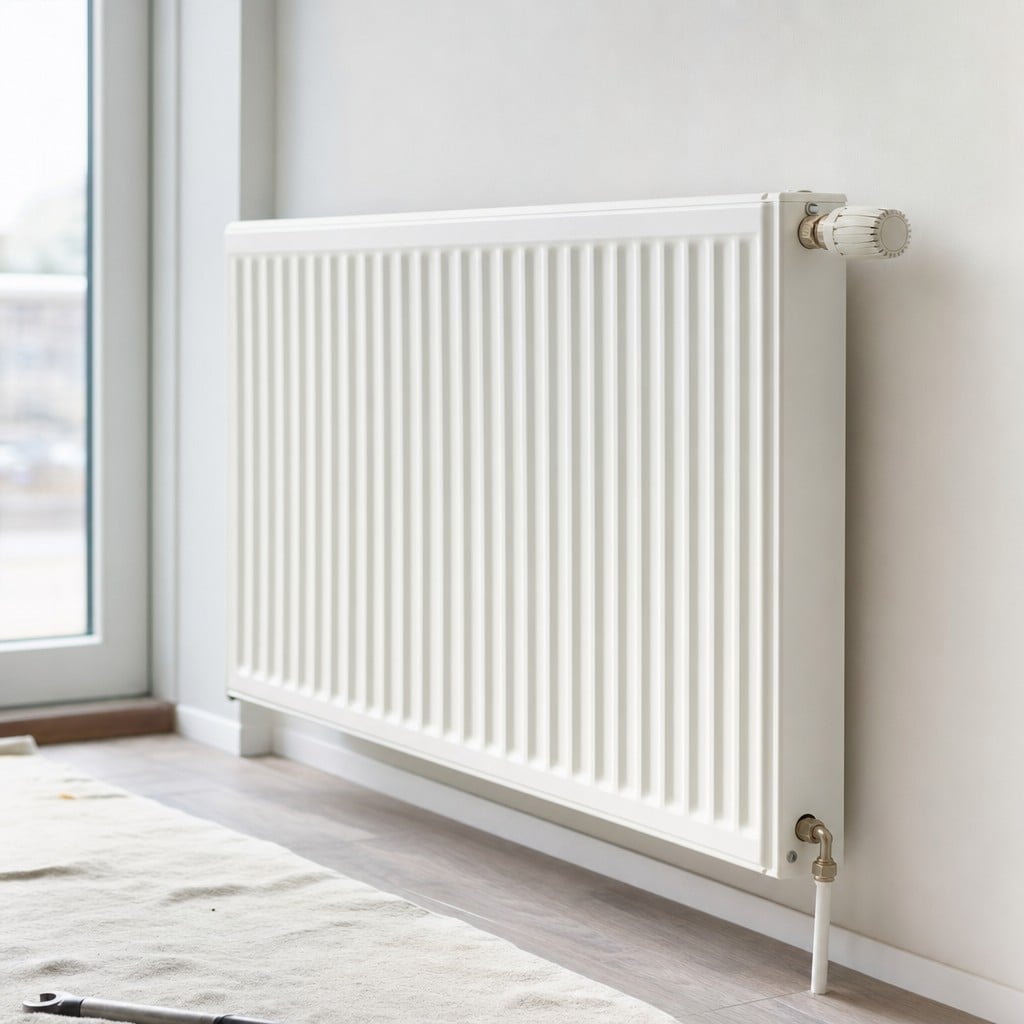
When a radiator remains cold while heating works elsewhere, the problem can come from several sources: air accumulation in the circuit, thermostat closed, shut-off valve blocked, or limescale deposits. In Switzerland, hard water is frequent and creates blockages. Before contacting WK Haustechnik in Bassersdorf, you can perform a few checks that will sometimes resolve the issue without professional intervention.
Check the Radiator Valve and Trapped Air
The first step is to verify that the thermostatic valve is not closed or set too low. Turn the knob upward (maximum position) and wait a few minutes to see if heat returns.
Air trapped in the radiator prevents water from circulating properly. To bleed it:
- Locate the bleed screw at the top of the radiator (small hexagonal screw, often brass)
- Place a small container or cloth underneath to catch water
- Using an appropriate key (radiator bleed key), turn the screw very slightly counterclockwise
- Let air escape until water flows steadily
- Close the screw gently
This simple but decisive operation often solves the problem in minutes. If several radiators are cold, the entire system requires circuit balancing.
Check System Pressure and Leaks
Insufficient pressure in your heating system prevents water from circulating properly. Check the pressure gauge on your boiler (dial with a needle): pressure should be between 1 and 2 bars under normal conditions.
If pressure is too low:
- Locate the fill valve (usually at the base of the boiler)
- Slowly open this valve to let water in until you reach 1.5 bar
- Close it
If pressure rises quickly or if you notice a visible leak (drops under radiators, wet marks), professional intervention is needed. Water leaks, even minor ones, degrade system performance and heating efficiency.
Identify Limescale Deposits or Blockages
In high-limestone regions (common in French-speaking and German-speaking Switzerland), sediment accumulates inside radiators and pipes. A radiator may be warm at the base but cold at the top: this is a sign of internal blockage.
Two approaches are possible:
- Bleed further: reopen the bleed screw several times to dislodge air bubbles and small residue
- Call a professional: if the problem persists, WK Haustechnik has equipment to descale the circuit or perform complete flushing
Descaling also prevents repeated breakdowns and extends your boiler's lifespan.
Cases Requiring Immediate Professional Intervention
Certain situations require immediate expert contact:
- All radiators in the house are cold
- Your boiler shuts off or displays an error code
- You see or hear a water leak under or near radiators
- The radiator is hot at the base but completely cold at the top (probable internal blockage)
- System does not regain pressure after refilling
In winter, a heating failure can quickly become uncomfortable. WK Haustechnik in Bassersdorf responds quickly to diagnose and repair your system, replacing worn components if necessary (valves, thermostat, etc.).
Preventive Maintenance to Avoid Cold Radiators
Regular maintenance prevents many problems:
- Before winter: have your boiler serviced and circuit pressure checked
- Each season: bleed radiators once or twice, especially after closing heating in summer
- Each year: clean the outside of radiators (dust reduces efficiency)
If you live in a high-limestone water region, descaling every 3 to 5 years extends your system's lifespan and maintains optimal performance.
Frequently Asked Questions
How do I know if my radiator needs bleeding?
If the radiator is warm at the base but remains lukewarm or cold at the top, it's a sign of air accumulation. You may also hear gurgling sounds in the circuit. Simple bleeding often resolves this symptom in minutes.
Should I bleed all radiators at the same time?
No, start with the radiator furthest from the boiler (usually the highest in the house). Always check the return water valves (bottom of radiator): the circuit must be able to escape and close properly. If several radiators remain cold after bleeding, the entire circuit may require professional balancing.
When should I call WK Haustechnik rather than attempt a repair?
If after complete bleeding and pressure check your radiator remains cold, or if pressure doesn't stay stable, contact WK Haustechnik. Expert intervention prevents worsening the problem and quickly diagnoses the real cause (faulty valve, internal blockage, invisible leak).
---
If you have exhausted these checks and your radiators remain cold, or if you prefer to entrust maintenance to a professional, contact WK Haustechnik now at +41 79 558 84 30 or visit our site to request service. Our team responds quickly in the Bassersdorf region to restore your heating and secure your system.