
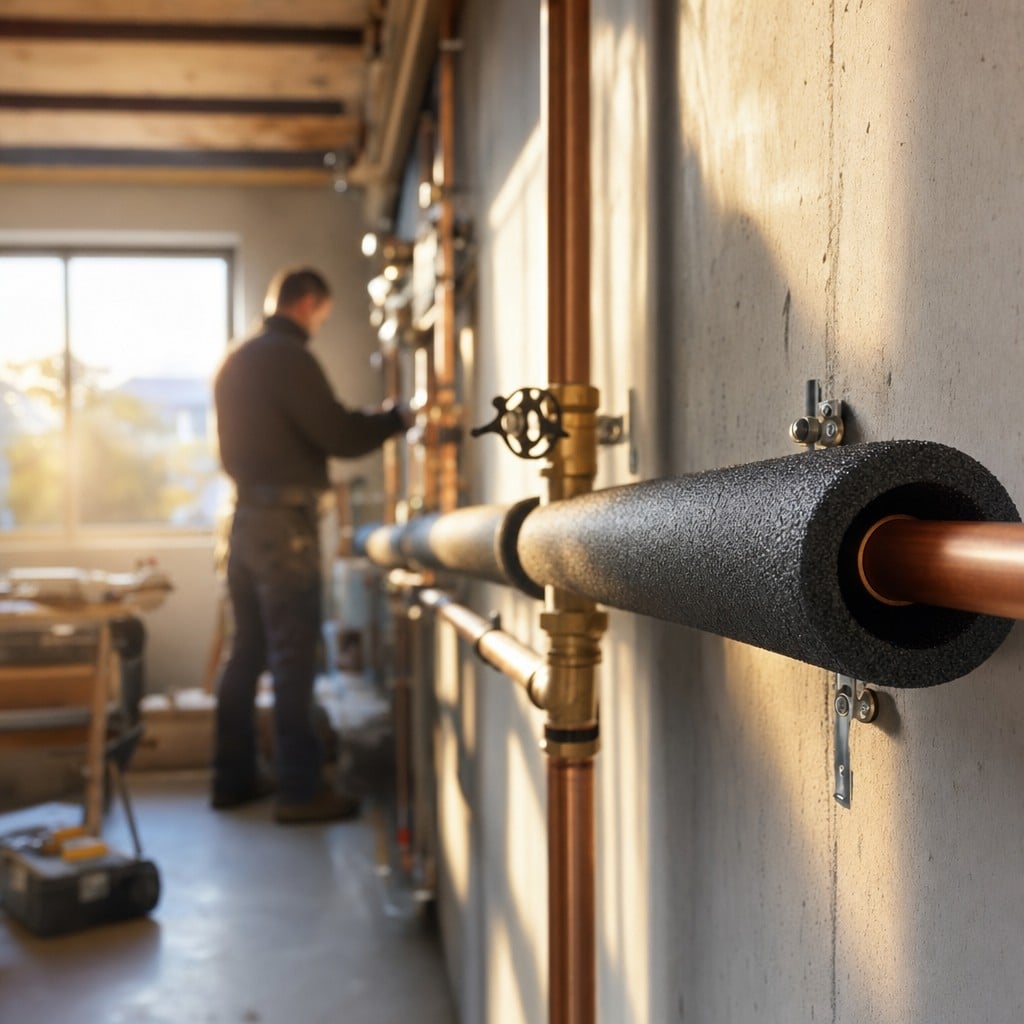
Frozen pipes occur when water in the lines freezes and expands, leading to cracks, leaks or complete blockages. This risk is particularly high in unheated areas such as basements, attics, external walls or poorly insulated pipe sections. The best strategy is prevention: early insulation, proper pipe installation and occasionally running water in critical areas reliably prevent frost damage.
Which pipe sections are particularly at risk?
Not all pipes freeze at the same rate. Those at particular risk include:
- Pipes in unheated rooms (basements, storage rooms, garages)
- External lines and pipes on external walls
- Water lines in poorly insulated attic spaces
- Pipes in close proximity to windows or external doors
- Pipe sections that carry no water for extended periods (supply lines to rarely used rooms)
- Pipe bends and sections with low flow rates
A quick look in the basement or at the basement pipes soon shows where action is needed. Particularly flats in older buildings without continuous insulation are susceptible.
Insulation: The most important protection
Pipe insulation is the most effective measure against frost damage. Insulating foams, foam fibres or special pipe insulation significantly reduce heat loss. The insulation should be at least 25 to 50 millimetres thick, depending on the region and pipe location.
It is important that fittings, valves and T-pieces are also insulated, as these cool down particularly quickly. Special attention should be paid to pipe sections that run directly beneath external walls or through uninsulated areas.
Heating tapes and electrical reheating
In particularly critical situations, heating tapes or pipe heating cables help. These are wrapped around the pipe and heat the line to a few degrees Celsius as needed. They are a good solution for hard-to-reach or particularly exposed pipes, but require a power source and regular inspection.
Reconsidering pipe routing
During renovation or new installation, pipes should preferably be routed through heated rooms. Avoid long stretches through uninsulated external areas. Pipes should not run directly along external walls, but should be better positioned inside the building where room heat provides protection.
What to do when frost threatens?
When frost is imminent, simple measures also help:
- Close valves and taps in unused rooms to allow water to drain from at-risk pipes
- Occasionally let water flow through critical lines to prevent stagnation
- Keep the temperature in unused rooms no lower than 5 to 8 degrees Celsius
- Keep doors to unheated rooms closed and do not insulate them completely
Recognising frost damage and acting quickly
Even small signs point to frozen pipes: no water from certain taps, unusual noises in the pipes or visible ice crystals on pipes. In such cases, you should act quickly and contact a specialist company before the water becomes completely blocked and pipes burst.
WK Haustechnik in Bassersdorf is here to help you with pipe problems and their prevention. Early inspection and professional insulation save expensive emergency call-outs later.
Frequently asked questions
At what temperature do water pipes freeze?
Water pipes typically freeze at outdoor temperatures below 0 degrees Celsius, especially if pipes are uninsulated and remain stationary for extended periods. Poorly insulated pipes can become problematic at temperatures just below freezing point.
Can I thaw the pipes myself?
For superficial icing, heat sources such as fan heaters or warm cloths can help. For deeply frozen pipes or unclear blockages, you should call a specialist company to avoid damage from improper handling.
Is pipe insulation expensive?
Pipe insulation is a cost-effective investment compared to repair costs after frost damage. Materials and installation are affordable, and the measure also reduces heat loss and thus energy costs.
If you have questions about proper insulation or suspect problematic pipe sections in your home, call WK Haustechnik: +41 79 558 84 30. Our team will assess the situation on site and recommend the best solution for your needs. This way you avoid costly frost damage and prepare your home for winter safety.